Biographies of men who shaped Nizari Ismaili spiritual, political, intellectual and community life, alongside shared Ismaili history before the 1094 succession division.
Historical records are uneven: many early figures have no documented childhood or authenticated portrait. Cards say when dates or personal details are uncertain. For medieval people, contextual artifacts or clearly labelled artistic images appear where available; they are not presented as verified likenesses. The Ismaili history before the 1094 succession division is shared; profiles after it focus on the Nizari line.
Ismaili scholars, missionaries and historians
Fatimid coinage of the period; contextual artifact, not a portrait.
Ismaili da'i and Sulayhid ruler of Yemen
Ali al-Sulayhi
d. 1067 CE · Sulayhid state founded c. 1047
‘Ali ibn Muhammad al-Sulayhi was a Yemeni Ismaili da‘i who founded the Sulayhid dynasty, which acknowledged the Fatimid Imam-Caliphs. From about 1047 he expanded Sulayhid authority across much of Yemen and helped revive the Fatimid da‘wa there. His rule tied Yemeni politics to Cairo, while the later leadership of his family included Queen Arwa. In 1067, during a pilgrimage journey, al-Sulayhi was captured and killed by the Najahid ruler of Zabid in a tribal vendetta. His son Ahmad al-Mukarram succeeded him; the dynasty continued under Ahmad and the queen Asma, and later under Arwa.
No verified portrait located; this marker is not a portrait.
Fatimid chief da'i, poet and statesman
Al-Mu'ayyad fi'l-Din al-Shirazi
c. 1000–1078 CE
Al-Mu’ayyad fi’l-Din al-Shirazi (c. 1000–1078) was a Persian Ismaili scholar, poet, statesman and missionary. He first advanced the Fatimid cause among the Buyid rulers of Shiraz, but persecution forced him to flee to Cairo. Court officials initially kept him from the Imam-Caliph al-Mustansir; he later entered the Imam’s service and became head of the Fatimid da‘wa. He also led diplomatic and military missions in Syria and Iraq, seeking alliances against Saljuq expansion. His memoir and collected poems preserve his career and offer a first-person view of eleventh-century political struggles.
No verified portrait located; this marker is not a portrait.
Persian Ismaili missionary and philosopher
Abu Ya'qub al-Sijistani
d. c. 971 CE · birth details unknown
Abu Ya‘qub al-Sijistani was a leading tenth-century Ismaili da‘i and philosopher whose work centred on Khurasan and Sijistan in eastern Iran. He helped sustain the mission amid political danger and disagreement among Ismaili groups. His writings developed a distinctive account of creation, prophecy and the Imam’s authority, adapting Neoplatonic ideas within an Ismaili framework. Works such as Kitab al-Yanabi‘ became important sources for later Ismaili thought. Al-Sijistani remained a missionary as well as a thinker; his exact death date is uncertain.
No verified portrait located; this marker is not a portrait.
Fatimid theologian and philosopher
Hamid al-Din al-Kirmani
fl. c. 996–1021 CE · birth date unknown
Hamid al-Din al-Kirmani was a major Ismaili theologian and senior da‘i in the reign of Fatimid Imam-Caliph al-Hakim. Already prominent in Iraq and Iran, he was summoned to Cairo around 1014 to address doctrinal divisions in the da‘wa. His works defended the Ismaili understanding of the Imamate and developed a sophisticated philosophical theology, especially in Rahat al-‘Aql, completed in 1020–21. Al-Kirmani returned to Iraq and died after 1020; his career illustrates the intellectual ties between Cairo and the eastern Ismaili mission.
Nasir Khusraw's shrine, a heritage site rather than a portrait.
Persian poet, philosopher and da'i
Nasir Khusraw
1004 – after 1070 CE (death year uncertain)
Nasir Khusraw was born in 1004 or 1005 in Qubadiyan near Balkh and held administrative posts before a spiritual turning point led him west in 1045. He reached Cairo in 1047, embraced Ismaili teaching and was appointed hujja, or chief representative, for Khurasan. After returning east, he faced opposition and spent his later years in Yumgan, Badakhshan, under local protection. There he wrote philosophical and theological works, poems and the Safarnama, an account of his journeys. His writings remain among the most important Persian sources for Fatimid-era Ismaili thought.
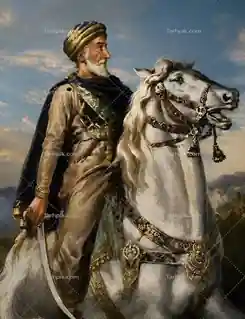
Artistic interpretation; no authenticated contemporary portrait is known.
Founder of the Nizari state at Alamut
Hasan-i Sabbah
c. 1050s–1124 CE
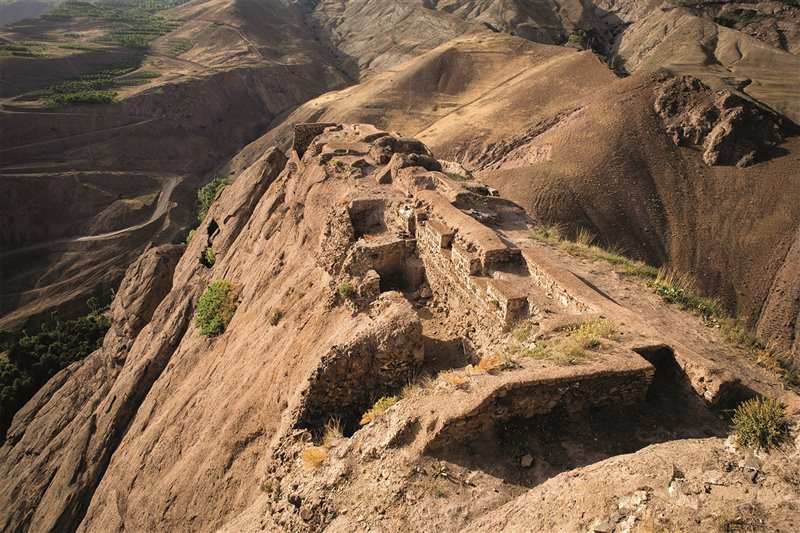
Hasan-i Sabbah, born into a Shi‘i family in Qumm, became an Ismaili missionary and studied in Isfahan before travelling to Fatimid Cairo in 1078. He returned to Iran in 1081 and organized the Nizari mission against Saljuq opposition. In 1090 he gained control of Alamut, which became the centre of a network of Nizari strongholds and communities. He led the da‘wa and state from there until his death in 1124. His lost autobiography was quoted by later historians; modern scholarship separates the documented history from later legends about the Nizaris.
Alamut ruins, contextual image from Nizari history; not a portrait.
Leader of the Syrian Nizari Ismailis
Rashid al-Din Sinan
d. 1193 CE · active in Syria c. 1160s–1193
Rashid al-Din Sinan led the Syrian Nizari Ismailis in the late twelfth century and became the region’s most prominent da‘i. Sent from Alamut, he based his authority at Masyaf and coordinated a network of fortresses in the Syrian mountains. His leadership combined religious guidance, diplomacy and defence amid Crusader and Muslim rivalries. Sources preserve negotiations with neighbouring rulers as well as conflicting accounts of his relations with the Crusaders. Sinan died in 1193; the Syrian Nizari community continued under successors with its own local institutions.
No verified portrait located; this marker is not a portrait.
Chief judge and Ismaili jurist
Al-Qadi al-Nu'man
c. 903–974 CE
Al-Qadi al-Nu‘man (d. 974) was the foremost Fatimid jurist and historian, serving the first four Imam-Caliphs in several roles. Appointed chief judge by al-Mansur in 948, he also administered grievances and advised the court. His Da‘a’im al-Islam systematized Fatimid Ismaili law, while Iftitah al-Da‘wa recorded the beginnings of the Fatimid mission and state. His works on law, history, doctrine and court practice helped the Fatimids move from a revolutionary movement to established government. They remain foundational sources for Ismaili jurisprudence and Fatimid history.
No verified portrait located; this marker is not a portrait.
Diplomat and Pakistan's UN representative
Prince Aly Khan
1911–1960 CE
Prince Aly Khan (1911–1960), elder son of Aga Khan III, led a varied public life that included diplomacy, sport and international representation. He served Pakistan as its ambassador to the United Nations from 1958 until his death. In May 1960, while serving as Pakistan’s representative, he was seriously injured in a car crash near Paris and died shortly afterward. Contemporary tributes in the US Congress and the National Portrait Gallery record his diplomatic role and public career. His son Karim succeeded Aga Khan III as Imam in 1957; Aly Khan remained a prominent figure in Pakistan’s diplomatic and cultural life.
Prince Sadruddin Aga Khan (1933–2003), born in Neuilly-sur-Seine, studied at Harvard before beginning an international career with UNESCO and the United Nations refugee agency. He served as UNHCR Deputy High Commissioner from 1962 and High Commissioner from 1966 to 1977, leading the agency through major displacement crises, including the 1971 South Asian refugee emergency. After leaving the post, he founded the Bellerive Foundation to advance environmental protection and later held further UN humanitarian roles. His tenure is documented in UNHCR’s archives and official memorial records.
Official portrait via the Ismaili Imamat Media Centre.
AKDN board leader and arts patron
Prince Amyn Aga Khan
born 1937 · current
Prince Amyn Aga Khan was born in Geneva in 1937 and studied at Harvard, graduating in 1960. He subsequently joined the United Nations Secretariat’s Department of Economic and Social Affairs and worked in development and economic planning. Over decades he has contributed to the Aga Khan Development Network through institutional and board roles, including work connected with economic development, health, culture and education. He also helped shape the vision for the Aga Khan Museum in Toronto and serves in its governance. His public work has centred on long-term institutional development rather than a separate political career.
Portrait published with an interview on ocean conservation.
Wildlife photographer and conservationist
Prince Hussain Aga Khan
born 1974 · current
Prince Hussain Aga Khan is a wildlife photographer whose work focuses especially on marine life and threatened ecosystems. He began scuba diving as a teenager, and his photographs have since been presented in exhibitions such as Fragile Beauty and The Living Sea. He established the conservation organisation Focused on Nature in 2014 to support advocacy and research for wildlife and habitats. His work connects visual storytelling with conservation education and partnerships among communities, researchers and environmental organisations.
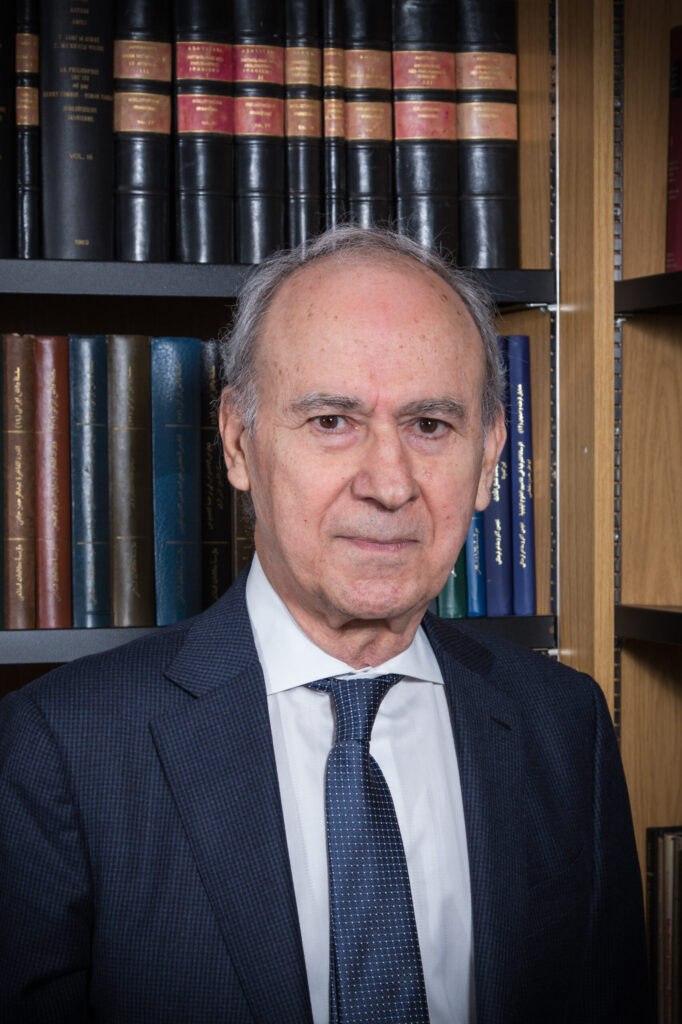
Farhad Daftary is a historian of Ismailism whose scholarship has shaped modern research on the community’s history and intellectual traditions. Born in Tehran, he studied in Iran and Europe and earned a doctorate in economics at the University of California, Berkeley. He joined the Institute of Ismaili Studies in 1988 and led its Department of Academic Research and Publications from 1992 to January 2023; he is now Director Emeritus and a Governor. His books, including The Isma‘ilis and The Assassin Legends, and his editorial work have made major scholarly sources accessible to wider audiences.
Harvard scholar of Ismaili and South Asian Muslim traditions
Ali S. Asani
born and raised in Nairobi · Harvard faculty since 1983
Ali S. Asani, born and raised in Nairobi, studied comparative religion at Harvard College and graduated summa cum laude in 1977. He has taught at Harvard since 1983, working across the study of religion, Near Eastern languages and South Asian and African languages and literatures. His research examines Ismaili devotional traditions, especially ginans and other Indic-language literature, and the ways art, poetry and music shape Muslim religious life. His books include Ecstasy and Enlightenment and studies of the Harvard Ismaili manuscript collection; he has also directed Harvard’s Prince Alwaleed Islamic Studies Program.
No verified portrait located; this marker is not a portrait.
Scholar of media, Muslims and diaspora
Karim H. Karim
career documented; personal birth details not published
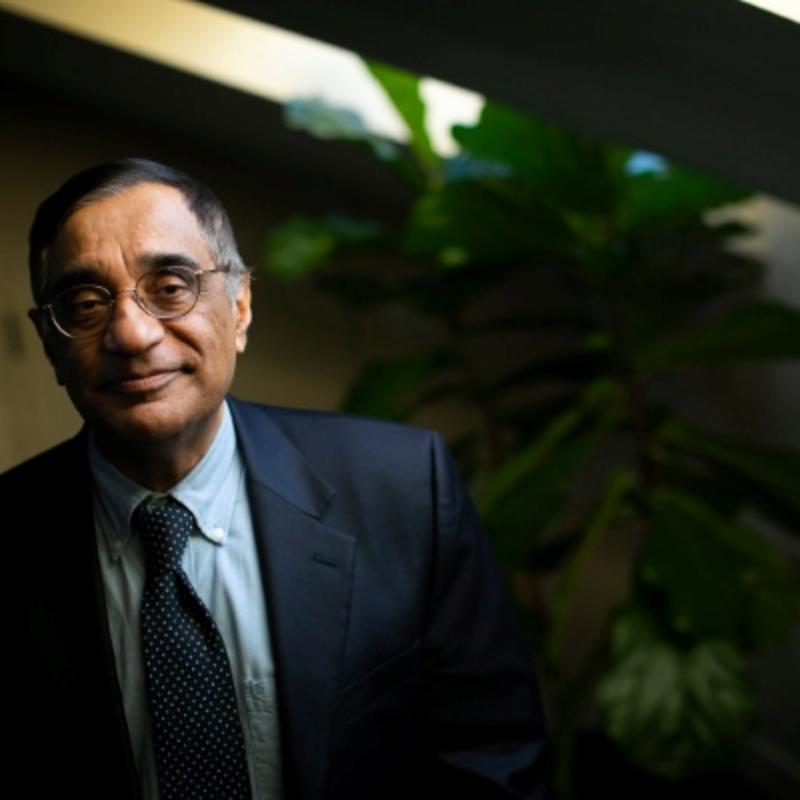
Karim H. Karim is a scholar of media, religion and diaspora whose research examines how Muslims and Islam are represented in public life. At Carleton University he has served as director of the School of Journalism and Communication and of the Carleton Centre for the Study of Islam, and holds the title Chancellor’s Professor. His work combines media analysis with questions of migration, identity and interreligious relations. He has also contributed to public and academic discussions on Islamophobia and media coverage, and has edited influential volumes on diaspora media and Western-Muslim intersections.
No verified portrait located; this marker is not a portrait.
Scholar and former Director of the Institute of Ismaili Studies
Azim Nanji
career documented; personal birth details not published
Azim Nanji is a scholar of religion and Islam whose work has addressed Ismaili traditions, religious ethics and pluralism. He served as Professor and Chair of the Department of Religion at the University of Florida before becoming Director of the Institute of Ismaili Studies in London from 1998 to 2008. He later served as Senior Associate Director of Stanford’s Abbasi Program in Islamic Studies. Nanji has written and edited books on Islam and Ismailism, including The Penguin Dictionary of Islam; he is currently a Special Adviser to the Aga Khan University Provost and serves in pluralism initiatives.
This collection contains 16 biographies of Ismaili scholars, missionaries, public figures and community leaders. Imam biographies are presented separately in the dedicated Imam collection. It is a documented directory, not a complete census of every influential Ismaili man; personal details omitted by historical records have not been invented.